Skip to content

What is harissa?

March 26, 2009

…is a question we were asked recently (in connection with this recipe).

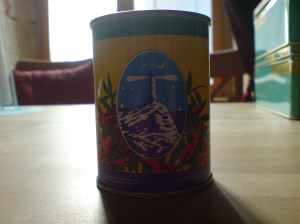
Harissa is a paste made from chili peppers, garlic, carway, coriander and salt. It looks a bit like tomato puree.

It is readily available both in the UK and in France. In France it is cheap, and when we lived in the UK we would stock up whenever we came to France.

HarissaWe buy it in small tins (135g). Because you don’t need much we spoon it into small dollops (1 to 2 teaspoons per dollops) onto a tray and then freeze it. So whenever you need it you can just pick it off the tray and drop it into the pan.
You can also buy it in tubes, which (once opened) you can keep in the fridge and then just squeeze a bit into your cooking when required.

Our friend Tony, from FrangloForum, also pointed out the following: “I have found that harissa when added judiciously adds more of a warmth than spiciness but really does come down to how you use it. I think as with all herbs and spices you can add but you cant take away so it is best to start with a little and add a bit at a time until you get the flavour you want.
Harissa is widely used in North Africa and Bruce’s tagine recipe is quite typical of dishes of the region and sound quite delicious. I think I will try it sometime.”

How to find Vegetarian Cheese in France

March 26, 2009

Finding vegetarian cheese (cheese made with non-animal rennet) in the UK has been easy for a number of years now, due to the clear labeling of products, indicating whether, or not, they are vegetarian.

In France the labeling of foodstuff to indicate whether suitable for vegetarians (convient aux végétariens) is not widespread at the moment (see below for the exception we have found).

In fact, many cheeses, you can buy in French supermarkets, fail to fully list the ingredients.

So, if you can’t rely on hoping to find the label convient aux végétariens, on cheese, what should you look for?

Well if the cheese doesn’t list it’s ingredients assume it is NOT vegetarian: put it down and move on. If the ingredients are listed look for one of these two words: “présure” or  “coagulant”.

If the word “présure” is on the label it is safe to assume this is animal rennet and therefore NOT vegetarian (sometimes they are even more helpful and state “présure animale”). If it says “coagulant” generally this is non animal in origin (but remember that rennet is a coagulant so to be safe check this list)

Just be aware that if the cheese is labeled AOC (Appellation d’Origine Contrôlée) or are red label cheeses then they have definately been made using présure animale and are NOT VEGETARIAN.

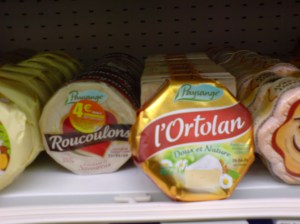
Paysange cheese - Convient aux végétariens

Paysange cheese - Convient aux végétariens


Happily the lovely people at Paysange are now making cheese which are made without the use of animal rennet and are labeled clearly (on the back of the packet) convient aux végétariens. I am not sure how widely available they are but two of the cheeses this company produce are stocked at our local Ecomarché.


If you know of any other cheeses, or other products sold in France, which are labeled Convient aux végétariens please leave a comment or email us.

Vegetarianandveganfrance.com & 3placedesarbres.com. Vegetarian & Vegan recipes from the kitchen of a vegetarian chambres d’hotes in the heart of France

French vegetarian B&B highlighted in Cook Vegetarian!

March 25, 2009

Under the heading “French Paradise” the May issue of Cook Vegetarian! highlights the vegetarian B&B 3 Place des Arbres, in its Product Showcase section.

The May issue is packed with great recipes and other useful information and is on sale on 3rd April (unfortunately only in the UK, but those of you living in France may be able to order it through your local stockist, or click on the link below to subscribe).

Beetroot and Pumpkin Soup serves 4-6

March 24, 2009

Another great recipe from Andrea’s kitchen in 3 Place des Arbres, a vegetarian B&B located in the heart of France (Creuse, Limousin).

1 Large onion diced

1.25 litre veg stock

1 ½ tsp mixed herbs

4 cloves of garlic crushed

2 tsp sweet paprika

½ tsp hot paprika (less or more, up to you)

½ tsp smoked paprika, if you have it

350g cooked beetroot, chopped

500-600g pumpkin/butternut squash chopped (cooked or raw)

2 large carrots, chopped

1 large potato, chopped

1tb olive oil

Salt & pepper

1 tbs white wine vinegar

2 tsp brown sugar

100ml crème fraiche (omit or use a soya alternative for vegans)

Sprinkles of herbs for salad (whatever you have that’s a bit green and tasty so parsley with chives or somesuch)

Heat oil on a medium heat in a large pan, add the onions and soften for about 5 mins, add the garlic for a further minute.

Add veg stock and carrots and potato and pumpkin if raw. Bring to the boil, add herbs, paprika and lots of pepper.

Simmer for about 15 mins, check if veg are cooked with a knife add beetroot.

When veg are all cooked, turn off the heat, add 50ml (a large dollop) of crème fraiche and blend it all until smooth (I use a hand blender but the ‘experts’ seem to think a blender is better.. one more thing to wash up…..)

Taste and adjust the seasoning if necessary, add a little more water if the soup is too thick.

Serve into big bowls and put a blob of crème fraiche (omit or use a soya alternative for vegans) in the middle giving it a little shimmy with a teaspoon so it looks all fancy. Sprinkle a pinch dried herbs for salad and serve with lovely crusty bread.

3placedesarbres.com

Vegetarian or vegan places to eat

March 24, 2009

We have yet to add anything to this page, but pop back soon…

If  you run a vegetarian or vegan restaurant, in France (or if you know of one!) and you would like to be listed on this site please email us (contact@vegetarianandveganfrance.com). Listing is free, and you will also get a page where you can display 2 photos and as much text as you want. All we require in exchange is a reciprocal link on your site. (We will consider “vegetarian friendly” establishments but will require evidence that you are indeed veggie-friendly (for example your website should contain a menu that clearly contains a vegetarian or vegan dish. Sorry for if this sounds petty, but it is very annoying when you click on a link that claims to cater for veggies to be confronted with a meat only menu!)

Vegan beer

March 23, 2009
Felis beer. Brewed in Felletin. Vegan beer

Felis beer. Brewed in Felletin. Vegan beer

This beer is brewed in our town by local artisans and is available in Blonde, Ambre, and Brune (our favourite), they also produce a Christmas beer too.

It is vegan, delicious and highly recommended.

Unfortunately it is only available locally – so if you want to try it, come and visit us!

Can vegans eat well in France?

March 23, 2009

If you are prepared to do your own cooking then certainly. Otherwise, make sure you book into a vegetarian/vegan chambres d’hotes (like this one).

One of the best things about France is the wide range of fresh fruit and vefresh vegetables bought from our local marketgetables that are available, many of which are grown locally. This makes cooking good vegan food a delight. Foods such as brown lentils are also widely available (red lentils take a bit more effort to find – you may have to go to a Bio (organic) shop, or one of the larger supermarkets).

One product that is surprisingly easy to get hold of is soya, in all it’s forms (although chunks and mince are usually only available in Bio shops). Even in the smaller supermarkets you can find soya milk, tofu, soya yogurts and other goods.

Ready meals are less available (which is generally a good thing, but there are times when you simply want to bung something under the grill, rather than cook it from scratch).

Vegan wine is difficult to find as the labeling of all foods is poor in comparison to the UK. The beer in our town (Felis, brewed in a tiny micro-brewery near the railway station in Felletin) is vegan.

Do vegetarians eat fish?

March 23, 2009

No, of course not.

The UK Vegetarian Society defines a vegetarian as “someone living on a diet of grains, pulses, nuts, seeds, vegetables and fruits, with or without the use of dairy products and eggs. A vegetarian does not eat any meat, poultry, game, fish, shellfish or crustacea, or slaughter by-products.”

But many people who eat fish do refer to themselves as vegetarians. I can undertand this. When travelling or going on a course, in order to ensure you don’t get a meat based meal you have to tick the box indicating you are a vegetarian (just as vegetarians often tick the box marked ‘vegan’ to ensure they don’t get a tuna sandwich, or a plate of boring cheese sandwiches).

In the UK, if you eat out and say you are a vegetarian you are no longer automatically offered fish.

Here in France things are a bit more out of date.  When a restaurant says it offers a vegetarian alternative (rare enough) you may find them referring you to the fish menu.

Even the media get it wrong.

In last weeks un diner presque parfait (5 people compete for 1000 euros, each night of the week a different contestant hosts and the others give marks out of 10 for table decoration, the food and ambiance) the voice over constantly referred to one of the contestents as Végétarienne as she didn’t eat meat. However, the meal she prepared consisted of fish for appetiser, starter and main course.

To be fair to the constestant, she did not declare herself vegetarian, saying only Je ne mange pas les viande (I don’t eat meat).

There is now a Facebook group calling on the television channel which broadcast the programme to appologise and make it clear that people who eat fish should not be referred to as vegetarian. Click here to join it.

The UK Vegetarian Society is currently running the following campaign:

Vegetarian/vegan wine in Bergerac

March 23, 2009
Vegetarian-vegan wine from Bergerac

Vegetarian-vegan wine from Bergerac

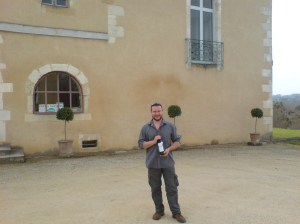
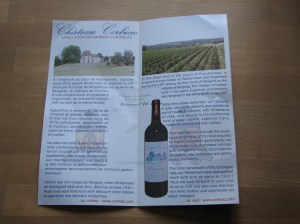
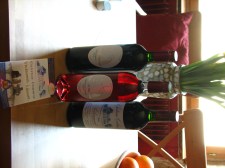
We were in Bergerac a couple of weekends ago (we have some friends down there) and too the opportunity to call into a vineyard on the way (Chateau Corbiac). They don’t use anything to filter the wine other than paper – no fish/eggs (the owner told us the reason for this is to ensure people with allergies to these products can safely drink their wine). We sampled the wine and came away with a few bottles of red and rose wine. Yum!

me outside Chateau Corbiac clutching a bottle of the 2004 red

me outside Chateau Corbiac clutching a bottle of the 2004 red

img_5639

Disclaimer: we can not be held resonsible if producers change their products, or if they have not been truthful in reporting their vegetarian/vegan status. If you have any information about any products please let us know

Committed to la comité

March 16, 2009


When we saw a poster publicising a meeting about organising events and fêtes in Felletin we decided to attend, as anything that attracts visitors is good for 3 Place des Arbres, our chambre d’hotes located in the heart of the town.

At the meeting, it was hard to follow the conversation (even though Andrea speaks good French and I understand a reasonable amount) as many people spoke at once. However, there was one word that stood out for both of us. Loud and clear: cotisations

Anyone who lives, or has lived, in France will know this word. Intimately. If cotisations was a person you would know them so well you would probably be related to them. Uncle Cotisation would not be one of your favourite relatives, you understand; you wouldn’t even invite him round for tea. Good heavens, no. As soon as you popped to the kitchen to put the kettle on, he would have your handbag off the mantelpiece, his grubby mitts rummaging around for your purse, hoping to liberate the spare change.

There was a debate about how much the cotisations should be. Some said it should be 5 euros. Other people argued for the cost to be double that, and they won. This seemed very alien to us – very un-British. Giving up your spare time and then paying for the privilege doesn’t seem right. Unless the money goes toward tea and biscuits. That would be ok. After all in Britain it would be unthinkable for people to go to a meeting and not be rewarded with a nice cup of tea. Although as each meeting started at 8.30pm, often finished around 11pm, perhaps a nice cup of cocoa may have been more appropriate.

We shrugged and paid our 10 Euros each.

The first major event to be planned would be a carnival at the end of February and this was to be followed by the Fete de Felletin in June.

There was talk of needing what sounded like “Chats” or “Chars”, something beginning with “Cha”, anyway. Neither of us had heard of this. Whatever they were, apparently they were big and they were expensive. They couldn’t be talking about cats, surely. They are neither big, nor expensive. Apart from lions, or tigers, of course.

Later, we looked up Char in the dictionary:

Char (Noun) 1. Military Tank; char leger/moyen/lourd light/medium/heavy tank; char d’assault ou de combat tank; fait comme un char built like a tank

Military Tanks? As in gigantic war machines with large caterpillar tracks, and turrets, and huge guns? What kind of festival was this? Had we joined a far-left group by mistake? Perhaps this was the paramilitary wing of the comité des fêtes. We appeared to be helping plan a communist-style military parade. Perhaps our cotisations weren’t going towards tea and biscuits, after all, but instead would fund a cache of arms, an attempt to overthrow the government and create a new Republic.

We checked the dictionary. There was another definition. With bated breath, we read on:

Char 2. (de carnaval) float.

So our cotisations weren’t to fund a revolution, Sarkosy could sleep soundly until the next election. Nor (as we found out at later meetings) were they to be used to supply tea, coffee, biscuits, or cocoa. They were required to pay for publicity (where do you think those annoying windscreen fliers that get stuck in your wiper-blades come from?), and to help purchase things needed to organise the first event, which in turn would help fund future events.

Carnival planning continued: the evening meal would be paella.

“Will you be eating with us?” the president of the committee asked Andrea, as everyone else was loudly chattering amongst themselves.

“No, I’m vegetarian,” she replied, “I can’t eat that: I don’t eat meat or fish.”

“I don’t suppose you could eat it if we just took the meat and fish out.”

“Sorry, no,” a hesitation, and then; “I could make my own – a vegetarian paella.”

The president looked confused. “What do you put in vegetarian paella?”

There was a sudden lull in the conversation around the room: everyone appeared to be wondering what the strange vegetarian lady would say next. It was as if a deathly silence had descended on the room, smothering all the talk with a blanket of shush. Even if you weren’t paying attention, you could hear the dressmaker, in the next village, swear under her breath over the clatter of a dropped pin.

“So, what do you put in a vegetarian paella?”

As the question hung in the air, like the scent of overripe cheese sweating in a dirty sock, Andrea could feel every eye in the room burning into her. She realised had their undivided attention. She was aware she had a unique opportunity to share and enlighten the group on the joys of vegetarian cooking.

She nervously cleared hear throat and, into the sound vacuum of the room a single word wriggled its way, reluctantly, out of her mouth.

“Vegetables,” she squeaked.

Despite this monumental recipe revelation, it was at this point that people lost interest and went back to talking at each other.

The carnival day arrived and everything went smoothly. We were amazed at the level of organisation how hard everyone worked. People had been decorating the room the night before, had worked from early in the morning and were still clearing tables and sweeping up at 4am. All this for no reward, other than hosting an event the whole community can enjoy.

The paella was indeed a meat and fish fest, with not a vegetable in sight, not even a solitary pea.

As the last few dishes were being served we heated up the pan of vegetable paella, Andrea had lovingly prepared earlier. People looked at it with interest. Or amusement – it was hard to tell.

It was delicious, and as usual Andrea had made much too much for the two of us, so she loaded up another dish and went round to the members of the committee.

“Would you like to try this vegetarian paella?” She said, serving spoon in her hand.

“I can’t eat that,” more than one person replied, with a smile. “I’m not a vegetarian.”

Of course they did try it, and one or two even suggested that we might make the meal vegetarian, next year. They were joking, of course. But you never know – come next time and perhaps we will be able to offer you a meat-free alternative.

3placedesarbres.com: a vegetarian B&B, La Creuse, Limousin

For the recipe click here